
5 Common Mistakes When Selecting Castor Wheels (And How to Avoid Them)
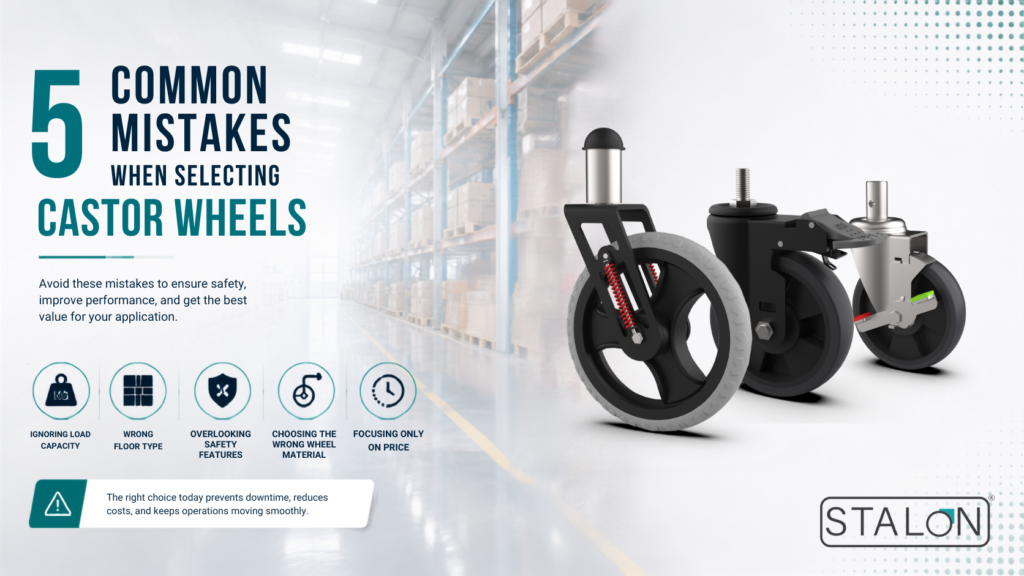
Selecting a castor wheel may seem like a simple decision, but choosing the wrong one can lead to poor mobility, damaged flooring, higher maintenance costs, and reduced equipment lifespan. Whether you’re designing hospital equipment, laboratory furniture, industrial trolleys, or commercial carts, understanding these common mistakes will help you make a smarter investment.
1. Ignoring Load Capacity
One of the biggest mistakes is selecting a castor based only on its size or appearance.
Every castor wheel is engineered to carry a specific load. Using a wheel with insufficient capacity can result in premature wear, damaged bearings, wheel failure, and unsafe operation.
Best Practice
- Calculate the total equipment weight.
- Include the maximum working load.
- Divide the total weight by the number of castors while keeping a safety margin.
2. Choosing the Wrong Wheel Material
The wheel material has a major impact on performance.
Different applications require different materials depending on floor type, load, and operating conditions.
Some common options include:
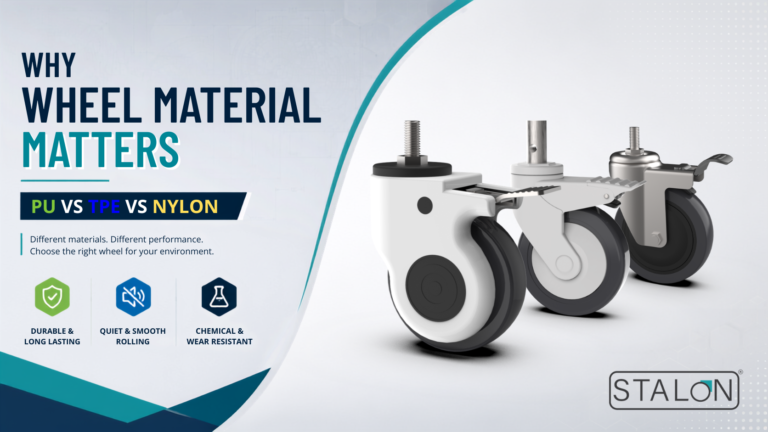
- Polyurethane (PU): Smooth rolling, excellent floor protection, low noise.
- Thermoplastic Rubber (TPE): Quiet operation with good grip.
- Nylon: Ideal for heavy-duty industrial applications with high load capacity.
Selecting the right material improves durability and overall performance.
3. Overlooking Floor Conditions
The surface on which the equipment moves is just as important as the castor itself.
Smooth hospital flooring, epoxy-coated factory floors, tiles, and rough concrete all require different wheel characteristics.
Choosing the correct wheel for your flooring reduces rolling resistance, protects the floor, and extends wheel life.
4. Forgetting About Braking Requirements
Many buyers overlook the importance of selecting the correct braking system.
Depending on the application, you may require:
- Wheel Brake
- Directional Lock
- Total Lock Brake
Medical equipment, laboratory carts, and workstations often require secure locking systems to ensure user safety and equipment stability.
5. Ignoring Environmental Conditions
Environmental factors can significantly affect castor performance.
Applications exposed to:
- Moisture
- Cleaning chemicals
- Heat
- Dust
- Static electricity
may require specialized materials such as corrosion-resistant components or ESD (Electrostatic Discharge) castors.
Considering the operating environment helps maximize service life and reduce maintenance.
Conclusion
Choosing the right castor wheel involves much more than selecting the correct size. Load capacity, wheel material, floor conditions, braking systems, and environmental factors all play a crucial role in ensuring smooth mobility, safety, and long-term reliability.
By avoiding these common mistakes, businesses can improve equipment performance while reducing maintenance costs and downtime.
At Stalon Castors, we engineer high-quality mobility solutions designed for healthcare, industrial, laboratory, institutional, and commercial applications—delivering reliable performance where it matters most.