
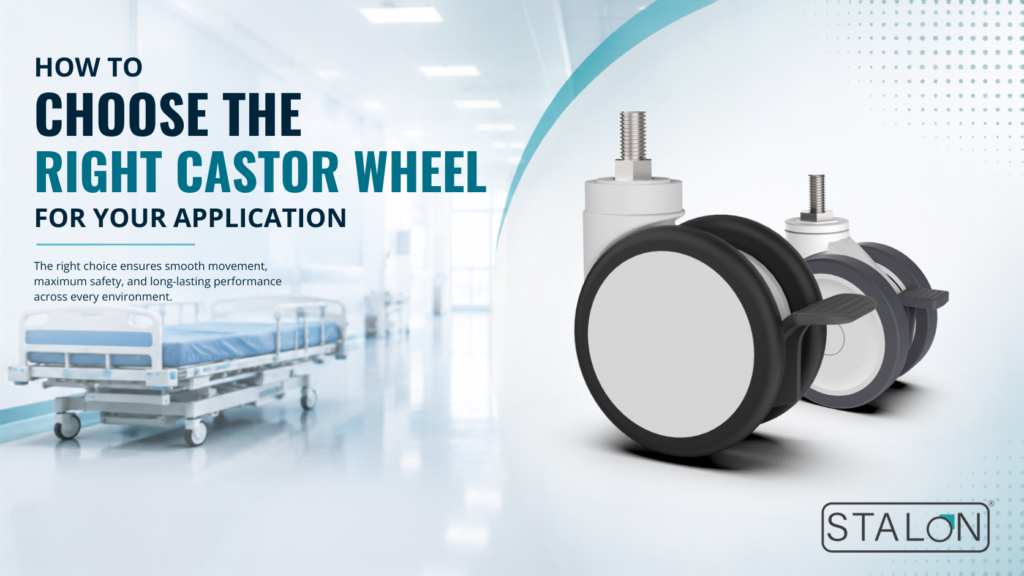
How to Choose the Right Castor Wheel for Your Application
Selecting the right castor wheel is more than simply choosing a wheel that fits your equipment. The correct castor improves mobility, enhances safety, protects flooring, and increases the lifespan of both the equipment and the wheel itself. Whether you’re designing a hospital bed, laboratory trolley, furniture system, or industrial cart, understanding the key selection factors is essential.
This guide will help you choose the right castor wheel based on your application requirements.
1. Understand Your Application
The first step is identifying where the castor will be used.
Different environments demand different performance characteristics.
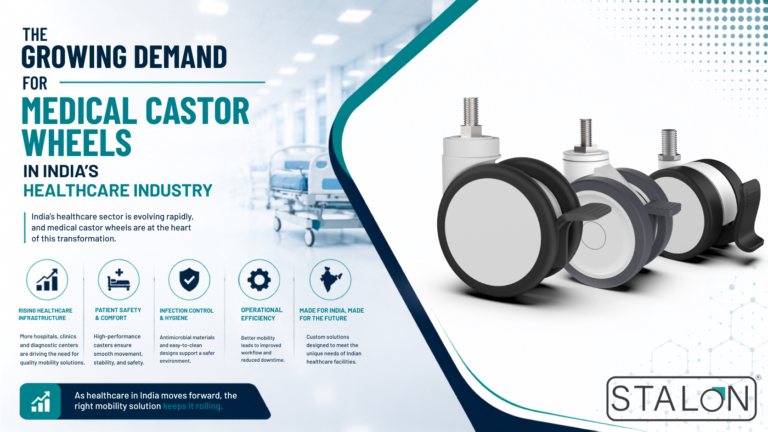
- Medical Equipment: Quiet movement, floor protection, easy cleaning, and reliable braking systems.
- Laboratory Equipment: Precision movement with excellent stability.
- Furniture Systems: Smooth mobility with an attractive appearance.
- Industrial Equipment: High load capacity, durability, and resistance to harsh working conditions.
Choosing a castor specifically designed for its intended environment ensures better performance and a longer service life.
2. Determine the Required Load Capacity
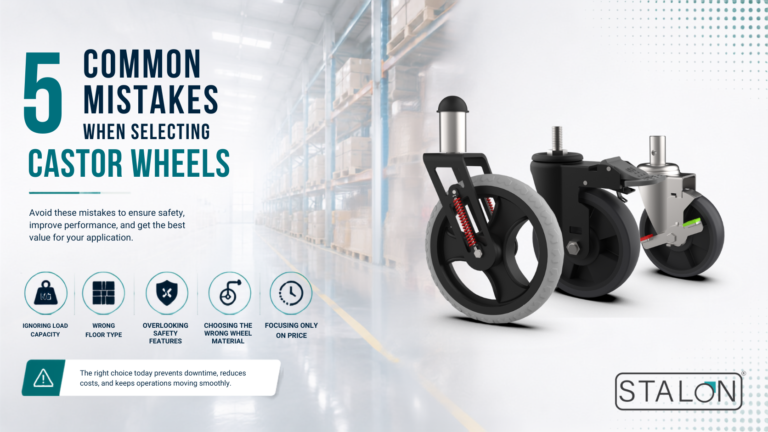
Load capacity is one of the most important considerations.
Calculate the total weight of your equipment, including any additional load it will carry, and divide it by the number of castors. It is always recommended to include an additional safety margin to accommodate uneven loading and dynamic movement.
Selecting a castor with insufficient load capacity can lead to premature wear, reduced mobility, and equipment instability.
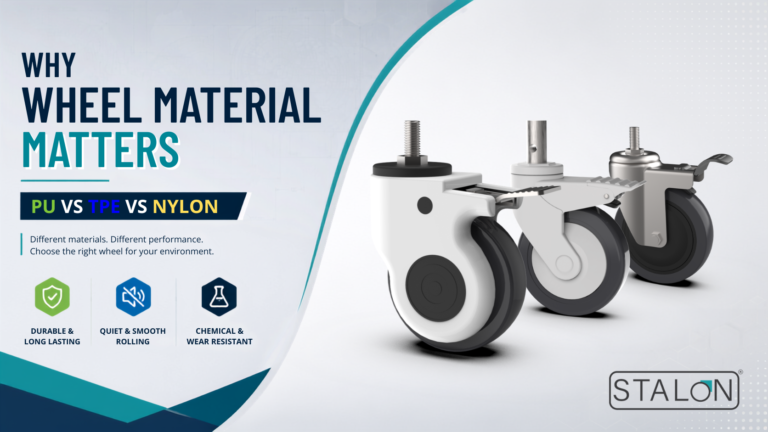
3. Select the Right Wheel Material
Different wheel materials offer different advantages.
TPE Wheels
- Quiet operation
- Excellent floor protection
- Suitable for hospitals and indoor environments
Polyurethane (PU) Wheels
- High wear resistance
- Smooth rolling
- Ideal for medium to heavy-duty applications
Nylon Wheels
- High strength
- Low rolling resistance
- Best suited for industrial environments and heavy loads
Choosing the correct material ensures optimal performance for your operating conditions.
4. Choose the Appropriate Fitting
The mounting method is equally important.
Common fitting options include:
- Threaded Stem
- Top Plate
- Bolt Hole
- Pillar Fitting
The correct fitting depends on the equipment design and installation requirements. Selecting the appropriate mounting option ensures secure installation and long-term reliability.
5. Consider Brake Requirements
Not every application requires the same type of braking system.
Depending on your equipment, you may require:
- Wheel Lock
- Total Lock
- Directional Lock
For medical equipment, locking mechanisms provide additional stability and help improve patient safety during operation.
6. Evaluate Floor Conditions
The floor surface directly affects castor performance.
Smooth indoor flooring benefits from softer wheel materials such as TPE or polyurethane, while rough industrial floors often require harder, more durable materials capable of withstanding demanding environments.
Selecting the correct wheel for the flooring helps reduce noise, minimize vibration, and protect the floor surface.
7. Consider Maintenance Requirements
High-quality castors require minimal maintenance but should still be inspected periodically.
Regular checks of bearings, wheel wear, and braking mechanisms help maintain smooth operation and extend product life.
Preventive maintenance also reduces unexpected downtime.
Conclusion
Selecting the right castor wheel involves balancing application requirements, load capacity, wheel material, fitting type, braking system, and operating environment.
A properly selected castor not only improves equipment mobility but also enhances safety, reliability, and long-term performance.
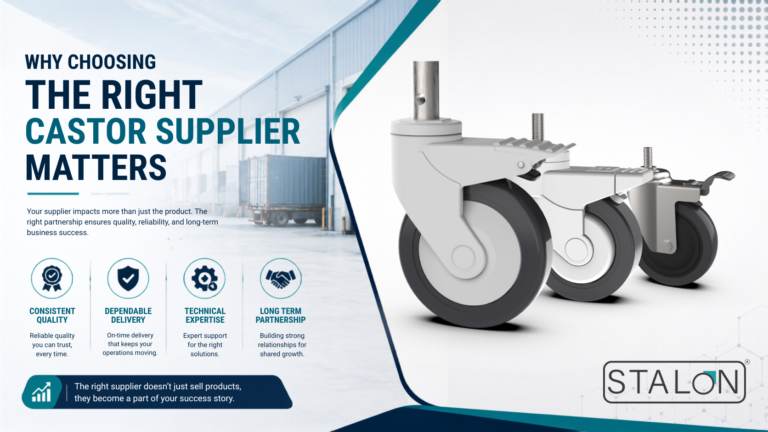
At STALON Castors, we offer a comprehensive range of precision-engineered mobility solutions designed for medical, laboratory, furniture, institutional, and industrial applications. Our engineering team is always available to help you choose the most suitable castor for your specific requirements.
Need help selecting the right castor?
Contact the STALON team today for expert guidance and product recommendations tailored to your application.