
Why Wheel Material Matters: PU vs TPE vs Nylon Castor Wheels
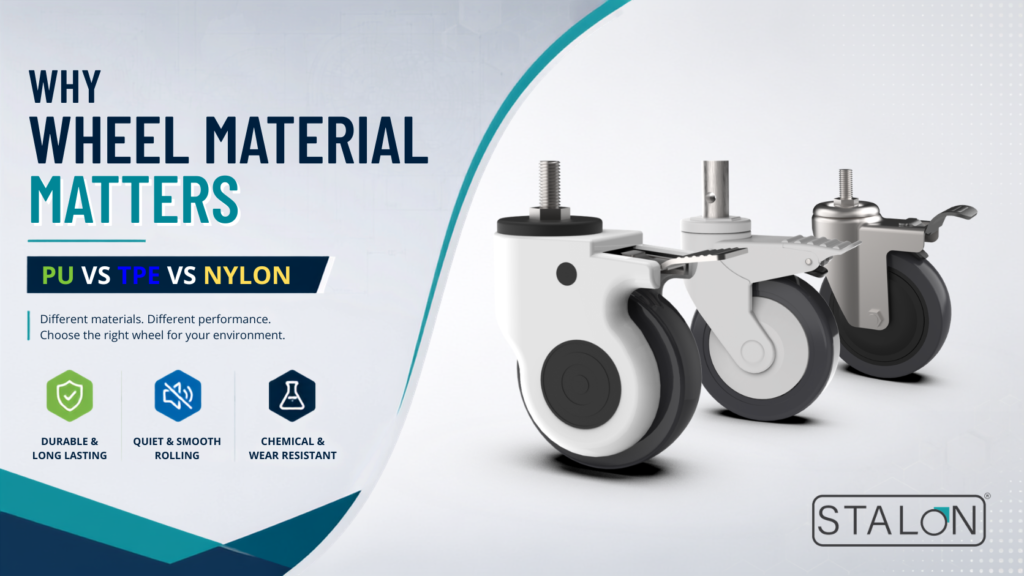
Choosing the right wheel material is just as important as selecting the correct castor. The wheel material determines how smoothly equipment moves, how much weight it can carry, the amount of noise it generates, and how well it protects the floor.
Among the most popular options are Polyurethane (PU), Thermoplastic Rubber (TPE), and Nylon wheels. Each offers unique advantages depending on the application.
Polyurethane (PU) Wheels
Polyurethane wheels combine durability with excellent floor protection, making them one of the most versatile options available.
Benefits
- Smooth and quiet movement
- Excellent wear resistance
- Protects delicate flooring
- High load capacity
- Low rolling resistance
Best Applications
- Hospital equipment
- Medical beds
- Laboratory trolleys
- Office furniture
- Material handling carts
Thermoplastic Rubber (TPE) Wheels
TPE wheels provide a soft and quiet ride while maintaining good durability.
They are ideal where noise reduction and floor protection are important.
Benefits
- Very quiet operation
- Non-marking wheels
- Good grip on smooth floors
- Comfortable rolling experience
- Suitable for indoor environments
Best Applications
- Hospital furniture
- Patient trolleys
- Medical carts
- Hotels
- Institutional equipment
Nylon Wheels
Nylon wheels are designed for strength and heavy-duty performance.
They are highly resistant to impact, chemicals, and heavy loads, making them ideal for industrial environments.
Benefits
- Extremely high load capacity
- Resistant to oils and chemicals
- Long service life
- Low maintenance
- Suitable for demanding applications
Best Applications
- Industrial trolleys
- Manufacturing facilities
- Warehouse equipment
- Heavy-duty carts
- Engineering workshops
| Feature | PU | TPE | Nylon |
|---|---|---|---|
| Noise Level | Low | Very Low | High |
| Floor Protection | Excellent | Excellent | Moderate |
| Load Capacity | High | Medium | Very High |
| Wear Resistance | Excellent | Good | Excellent |
| Chemical Resistance | Good | Moderate | Excellent |
| Best Environment | Hospitals & Commercial | Healthcare & Indoor | Industrial & Heavy Duty |
Which Wheel Material Should You Choose?
There is no single wheel material that works for every application.
- Choose PU for a balance of durability, smooth movement, and floor protection.
- Choose TPE when quiet operation and user comfort are the priority.
- Choose Nylon for heavy-duty industrial applications where strength and durability are essential.
Selecting the correct wheel material improves equipment performance, reduces maintenance costs, and extends service life.
Conclusion
The right wheel material directly impacts mobility, safety, efficiency, and durability. Understanding the differences between PU, TPE, and Nylon wheels helps ensure you select the best solution for your application.
At Stalon Castors, we manufacture castor wheels in a variety of materials to meet the requirements of healthcare, laboratory, institutional, commercial, and industrial environments.